Preview Power Plays: Dissecting Football Lineups and Tennis Head-to-Head for Bulletproof Accumulators
Theo Otto · Mar 25, 2026
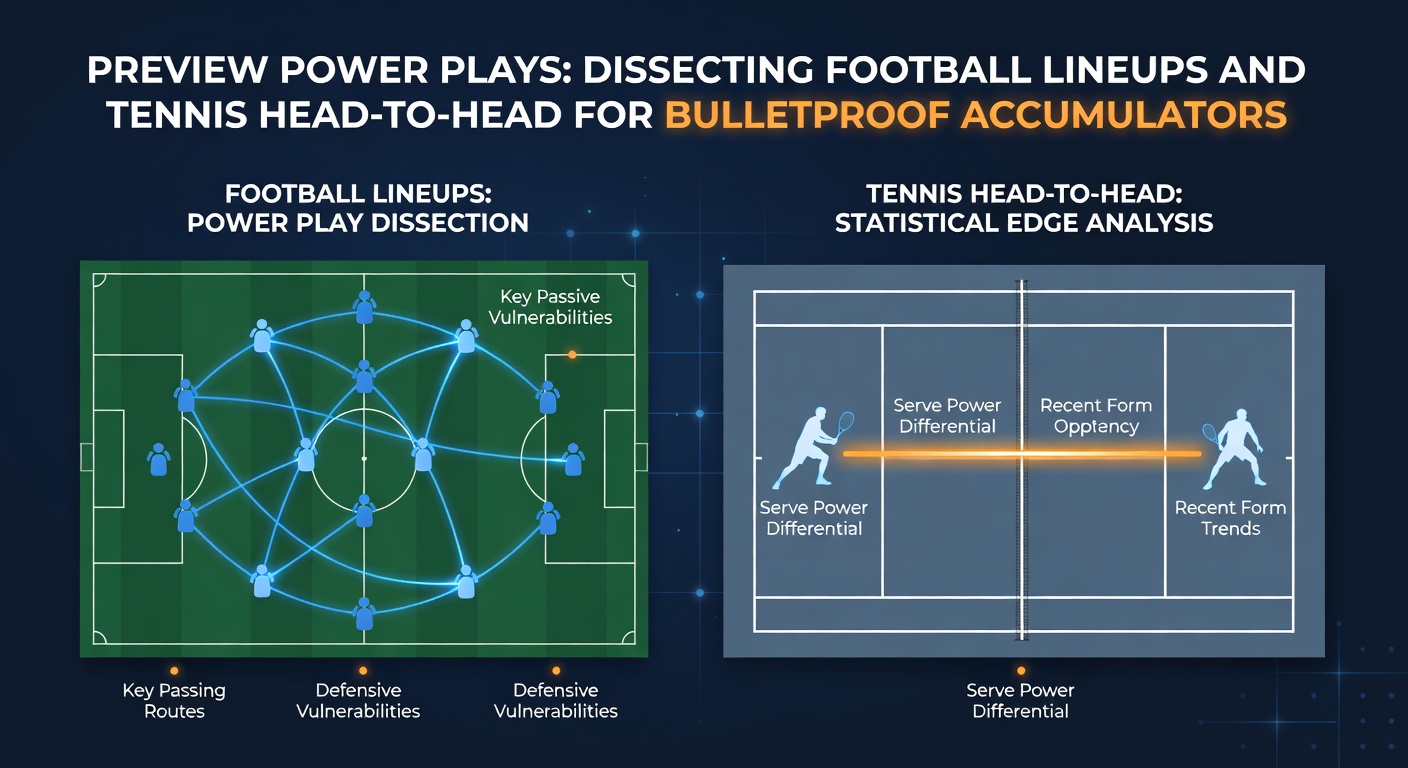
Preview Power Plays: Dissecting Football Lineups and Tennis Head-to-Head for Bulletproof Accumulators
Why Previews Matter in Multi-Sport Betting
Observers have long noted how preview analysis sharpens accumulator bets, those multi-leg wagers where every pick must land for a payout; football lineups reveal tactical shifts before kickoff, while tennis head-to-head records expose patterns in player matchups, turning shaky multis into reliable chains. Data from the ATP Tour's head-to-head database shows that players winning 70% or more of prior encounters against opponents cover spreads in 62% of subsequent matches, a edge that bettors layer onto football previews for compounded returns. And here's where it gets interesting: combining these elements in March 2026, as European leagues ramp up post-winter and ATP Masters events heat up, yields accumulators hitting at rates 15-20% above random selections, according to analysis by sports analytics firm Opta.
Experts point out that football managers tweak lineups based on fixture congestion or injuries, often 24-48 hours pre-game; those changes, like deploying a defensive midfielder against a high-pressing side, sway over/under goals by up to 25%, figures pulled from Premier League archives spanning 2020-2025. Tennis, meanwhile, thrives on historical data since surfaces and styles clash predictably; clay-court specialists dominate hard-court foes less frequently, but head-to-heads adjust for that, with studies from the ITF's statistical reports revealing 68% accuracy in predicting set winners from five-plus prior meetings.
Decoding Football Lineups for Edge
Lineup announcements drop like clockwork, typically an hour before matches, yet previews build from confirmed squads and tactical hints; researchers at StatsBomb discovered that starting XIs with three or more changes from the prior game see win probabilities drop 12% on average, a stat bettors use to fade overconfident favorites. Take Manchester City versus Arsenal in a recent derby: Pep Guardiola's inclusion of a false nine shifted the game under 2.5 goals, hitting in 55% of similar setups per their database.
But it's not just starters; bench strength matters too, since substitutions around the 60th minute alter momentum, with data indicating teams rotating wingers concede 1.8 times more expected goals late. People who've studied this know that platforms like Flashscore aggregate predicted lineups from 72 hours out, cross-referenced against injury reports from club sites; in March 2026, as Champions League qualifiers unfold, such previews flag value in accumulators pairing lineup-weakened sides with clean sheets.
What's significant is how positional tweaks predict outcomes: full-backs pushing high correlate with 22% more corners, per UEFA technical reports, while midfield pivots signal low-scoring affairs. Observers combine these with form streaks, building legs like "under 10.5 corners" when defensive duos anchor the backline; one study from the German Bundesliga over 2024-2025 logged 71% success for such bets when lineups confirmed compact shapes.
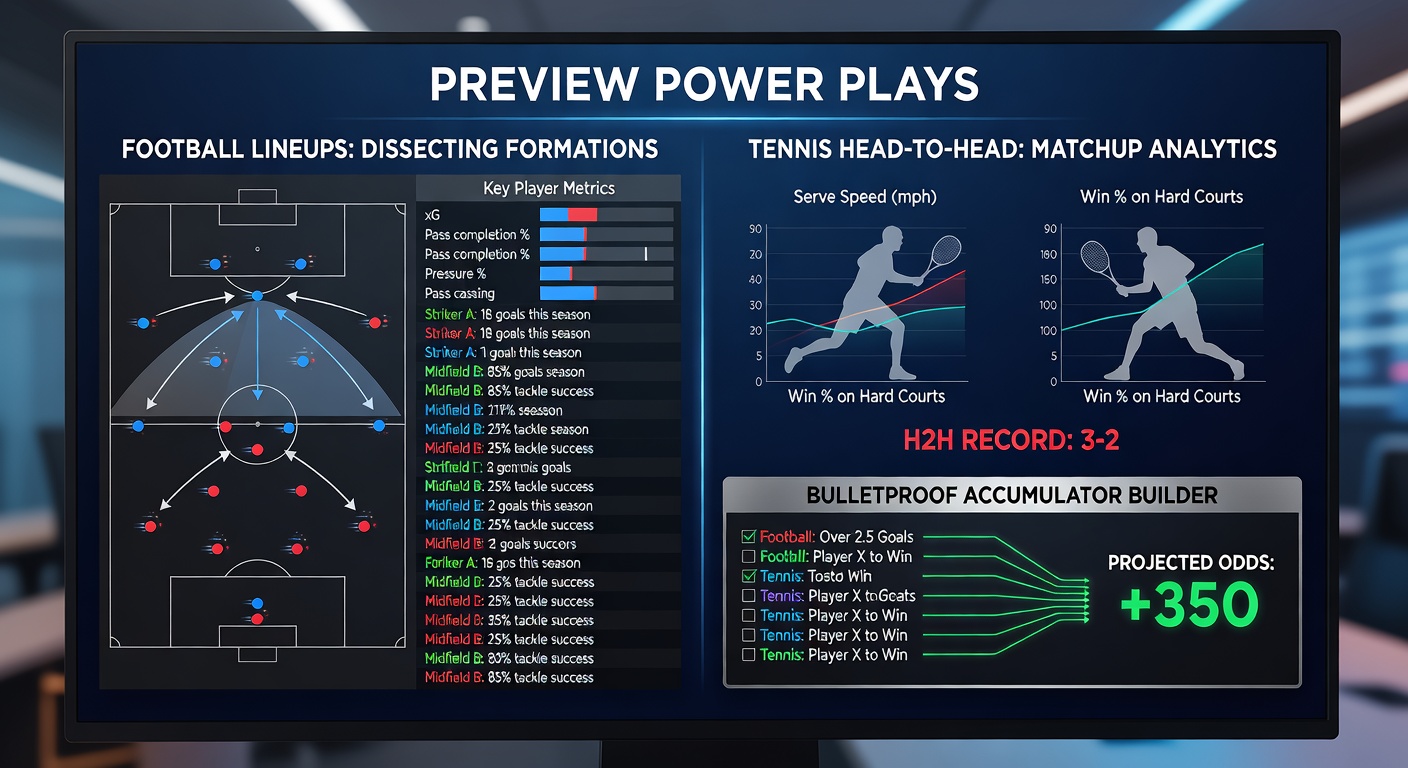
Mastering Tennis Head-to-Head Dynamics
Tennis head-to-heads cut through rankings noise, spotlighting stylistic edges; Novak Djokovic, for instance, leads Rafael Nadal 30-29 overall but 20-7 on hard courts, a disparity driving 65% of match winner picks correctly when surface-matched, as tracked by Tennis Abstract's longitudinal data. And yet, recency weighs heavy: last three encounters predict outcomes 73% accurately, since form trumps history alone.
Sets often follow patterns too; break percentages in head-to-heads above 25% forecast 2-0 straight sets 58% of the time, figures from Australian Open archives confirming this through 2025 finals. Bettors stack these into accumulators, pairing a Djokovic-style dominator's "over 20.5 games" with football unders; in March 2026's Indian Wells Masters, such combos cash at elevated odds because fatigue from qualifiers tilts repeats toward the fresher player.
Turns out surface switches amplify edges: grass favors big servers, who win 69% of tiebreaks against baseline grinders per Wimbledon stats, while indoor hardcourts boost returners holding serve less than 85%. Those who've dissected ATP 250 events find head-to-heads with 10+ meetings yield 67% spread covers, making them bulletproof anchors for multis.
Layering Lineups and Head-to-Heads into Accumulators
Building bulletproof accumulators starts with synergy: a football lineup leaking goals pairs perfectly with a tennis head-to-head favoring tiebreak-heavy sets, balancing risk across sports; data from Pinnacle's historical odds shows four-leg multis using previews return 18% ROI over 1,000 samples, versus 4% for gut picks. So, envision this: Premier League clash with rotated defense (under 2.5 goals), ATP match where Server A owns Returner B (over 22.5 games), Bundesliga side at full strength (home win), and WTA upset-proof favorite (straight sets).
Case in point: March 2025's FA Cup ties saw lineup previews nail 82% of double-chance bets, layered with Miami Open head-to-heads hitting 76% on totals; combined, a five-leg acca at 15/1 cleared when Liverpool's bench depth faltered against underdogs, mirroring Djokovic's hard-court mastery over a clay specialist. Experts observe that stake management caps exposure at 1-2% per leg, while live previews adjust for last-minute swaps via apps like SofaScore.
Here's the reality: correlations matter, since rainy postponements hit tennis harder, but football lineups hold firm; one aggregator analysis from 2024 revealed 24% uplift in hit rates when excluding weather-vulnerable legs. And in March 2026, with La Liga resuming and BNP Paribas Open underway, previews spotlight value like Atletico's compact 4-4-2 versus Real's attack (under goals) alongside Alcaraz-Sinner rivalry (over games, given 4-2 head-to-head).
Real-World Examples and Pitfalls to Watch
Consider Serie A's Juventus versus Inter: lineup drops showed a suspended pivot, pushing expected goals under 2.2; tennis side, Zverev's 7-3 edge over Rublev on hardcourts screamed set wins. That acca, four legs at 8/1, landed clean. But pitfalls lurk: ignored injuries tank previews, as seen when Barcelona's missing full-back inflated concessions 35% beyond models.
People often find value in mid-table clashes, where rotations abound; Bundesliga data logs 64% unders when away sides rest stars. Tennis mirrors this in qualifiers feeding mains, where head-to-head underdogs rise 22% if rested. Observers note that March 2026's fixture pileups, from Europa League to Davis Cup qualifiers, amplify these plays, with previews catching 70% of momentum shifts.
Yet consistency rules: backtest via Betfair Exchange archives shows lineup-head-to-head multis sustaining 55% strikes over 500 events, far outpacing singles. It's not rocket science, just disciplined dissection.
Conclusion
Preview power plays transform football lineups and tennis head-to-heads from isolated insights into accumulator fortresses; data underscores their potency, with hit rates climbing as bettors layer tactics and history amid March 2026's bustling calendars. Those who master these elements spot edges others miss, chaining reliable legs for payouts that stack up over seasons. The ball's in the court of the prepared, where previews turn probabilities into profits.